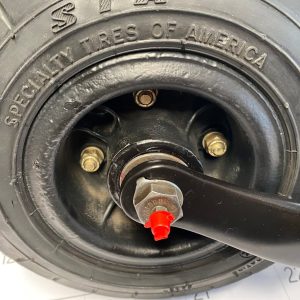
The Scott 3200A Tailwheel – Fully Rebuilt read more may suit classic airplanes, utility aircraft, bush planes, experimental designs, and other compatible general aviation platforms. A fully rebuilt description should identify which bearings, bushings, springs, steering components, seals, fasteners, wheel parts, and wear items were replaced or retained.
A Scott 3200A Tailwheel Assembly can contribute to controlled taxiing, parking, takeoff alignment, landing rollout, and maneuvering in confined ramp areas. The Scott Tailwheel Assembly may contain bearings, bushings, springs, steering pawls, arms, wheel components, axle hardware, fasteners, and internal wear surfaces.
The Aircraft Tailwheel Assembly should remain properly aligned, lubricated, secured, adjusted, and compatible with the complete aircraft steering system. A General Aviation Tailwheel may be used on training aircraft, classic taildraggers, bush airplanes, utility platforms, experimental aircraft, and restored vintage designs.
Whether the goal is a Replacement Aircraft Tailwheel or a broader purchase of General Aviation Landing Gear Parts, qualified review provides the strongest foundation.
Understanding the Scott 3200A Tailwheel
Its established design makes it suitable for consideration in restoration projects, utility operations, bush flying, private ownership, and flight training. A system-level evaluation can identify the true cause of binding, looseness, poor centering, irregular tire wear, or inconsistent ground control.
Maintaining a Scott 3200A Tailwheel Assembly
Actual operation depends on the complete aircraft installation rather than the tailwheel assembly alone. Reusable parts may remain acceptable when they pass inspection, while worn or damaged components should be replaced appropriately.
Professional Scott Tailwheel Rebuilding
Final adjustment and functional testing should confirm that the Scott Tailwheel Assembly operates consistently. Transparent rebuild information supports stronger commercial credibility and buyer confidence.
Choosing an Aircraft Tailwheel Assembly
The assembly carries tail weight while managing runway irregularities, side loads, repeated landing cycles, and directional forces. Incorrect linkage tension can cause delayed steering, harsh engagement, restricted movement, or unnecessary component loading.
Benefits of a General Aviation Tailwheel
Maintenance intervals should reflect actual operating conditions rather than calendar time alone. Experimental aircraft installations should be evaluated according to the builder’s configuration and applicable operational requirements.
Choosing an Aircraft Tailwheel
A well-maintained Aircraft Tailwheel can support smoother tracking and reduce unnecessary pilot workload. A serviceable tire-and-wheel arrangement supports the work completed within the steering mechanism.
Benefits of a Taildragger Tailwheel
Taildragger pilots coordinate rudder, brakes, power, and tailwheel input to maintain ground stability. Responsible operation can extend Taildragger Tailwheel service life.
Aviation Tailwheel System Components
A complete inspection helps avoid unnecessary replacement and repeated troubleshooting. Correct setup supports consistent Aviation Tailwheel System operation.
Tailwheel Steering Assembly Performance
Springs, pawls, bushings, bearings, steering arms, and internal contact surfaces can influence steering response. The mechanism should not interfere with surrounding structure, chains, springs, fairings, or nearby aircraft components.
Benefits of an Aircraft Ground Handling Tailwheel
Its mechanical condition influences how easily the aircraft can turn and track on the ground. Responsible ground movement protects the Aircraft Ground Handling Tailwheel and surrounding structure.
Benefits of the Scott 3200 Series Tailwheel
A professionally rebuilt Scott 3200A can continue this design heritage while offering renewed mechanical condition. Accurate information reduces ordering mistakes and improves buyer confidence.
Heavy-Duty Aircraft Tailwheel Applications
Rugged operations may involve gravel, grass, dirt, uneven surfaces, frequent cycles, contamination, and repeated loading. Durability depends on structural condition, bearing service, steering-spring integrity, wheel alignment, lubrication, tire condition, and correct installation.
Choosing Tailwheel Aircraft Parts
Tailwheel Aircraft Parts may include wheels, tires, bearings, axles, forks, steering arms, springs, pawls, bushings, seals, chains, bolts, and mounting hardware. Replacing only the most obvious damaged component may not correct the underlying issue.
Aircraft Tailwheel Directional Control
Consistent steering can reduce unnecessary brake use and improve maneuverability in confined locations. Maintenance personnel should inspect steering arms, springs, chains, fork structure, wheel condition, and mounting points after significant events.
Choosing a Replacement Aircraft Tailwheel
Correct identification reduces compatibility problems, return costs, and installation delays. Qualified personnel should verify condition, completeness, and installation suitability.
Maintaining General Aviation Gear Components
The tailwheel should be considered within the broader condition and alignment of the aircraft landing gear. The product description should explain whether components are rebuilt, repaired, serviced, inspected, untested, or sold for parts.
Inspecting a Fully Rebuilt Scott 3200A
A pre-purchase inspection should confirm the assembly identity, rebuild scope, structural condition, included components, tire status, steering arrangement, and available documentation.
- Request photographs of the front, rear, sides, wheel, fork, steering arms, mounting area, identification marks, and loose components.
- Arrange professional evaluation when rebuild quality, structural condition, or internal serviceability remains uncertain.
- Report missing parts, shipping damage, rough operation, identification discrepancies, or incomplete documentation according to the agreed terms.
Professional Scott 3200A Installation
Mounting surfaces, steering springs, chains, hardware, and attachments should be reviewed before the rebuilt unit is installed. The tailwheel should move through its intended range without binding, abnormal looseness, interference, or contact with surrounding components.
Pilots should report delayed steering, pulling, vibration, noise, binding, or irregular swivel behavior.
Maintaining the Scott 3200A Tailwheel
Preventive maintenance can identify wear before it develops into shimmy, binding, looseness, poor steering, or component damage. Pilots should inspect the tailwheel before operation for tire damage, loose hardware, bent parts, steering-link condition, contamination, corrosion, and visible misalignment.
Responsible care supports dependable Scott Tailwheel Assembly performance.
Selecting a Scott 3200A Tailwheel Assembly
When professionally inspected, installed, adjusted, tested, and maintained, the Scott 3200A Tailwheel – Fully Rebuilt can become a reliable component of a compatible conventional-gear aircraft. Buyers should request detailed photographs, rebuild records, accurate condition disclosures, secure transaction terms, qualified review, and protective shipping.
Whether buyers need an Aircraft Tailwheel, Taildragger Tailwheel, Aviation Tailwheel System, or Tailwheel Steering Assembly, qualified inspection remains essential. With verified compatibility, correct installation, professional steering adjustment, suitable lubrication, and routine inspection, the assembly can provide dependable long-term value.